



Have you ever felt like you can’t focus because your socks are too tight? Does your sandwich taste better cut into triangles? Are the toys thrown around the living room making you feel irritable and physically uncomfortable?
If any of these scenarios make sense to you, you may know what it’s like to live with sensory issues. While sensory issues are often associated with autism spectrum disorder, they are caused by and related to a lot of different things. To put it simply, having sensory issues means that your brain is having a hard time processing the sensory input that it is taking in. This can look different for everyone, but it can lead to increased anxiety, trouble focusing, and a lower ability to tolerate the changes and frustrations of life.
 Neurodivergent vs. Neurotypical
If you’ve never heard of these terms, welcome to the dark side (just kidding!).
In all seriousness, in a time of ever-growing knowledge about the world and about people themselves, these are good terms to know.
If your brain developed and functions within normal boundaries, you can consider yourself neurotypical. This means that your brain can process input and information in a “normal” way; you can organize your thoughts and make decisions without interference from your own brain.
If your brain developed and functions differently, you can be considered neurodivergent. This includes a very wide range of people. Neurodivergent people have a whole different set of strengths and challenges, thanks to the way their brain works. The way that they take in, process, and interact with the world is different from what is considered “normal.”
Day-to-Day in the Life of Neurodivergence
One of the amazing things about being neurodivergent is that everyone is different. Yet, there are definitely things that we have in common. If you are neurodivergent and you’ve never met another neurodivergent person, let me tell you, it is such an amazing feeling to talk to someone who GETS it.
I recently had a discussion with a friend about the difference between eating bunny-shaped Peeps versus chick-shaped Peeps. For someone who is sensitive to sensory input, there absolutely IS a difference. The different shapes create different marshmallow-to-sugar ratios in each bite, which leads to a different experience when eating each shape.
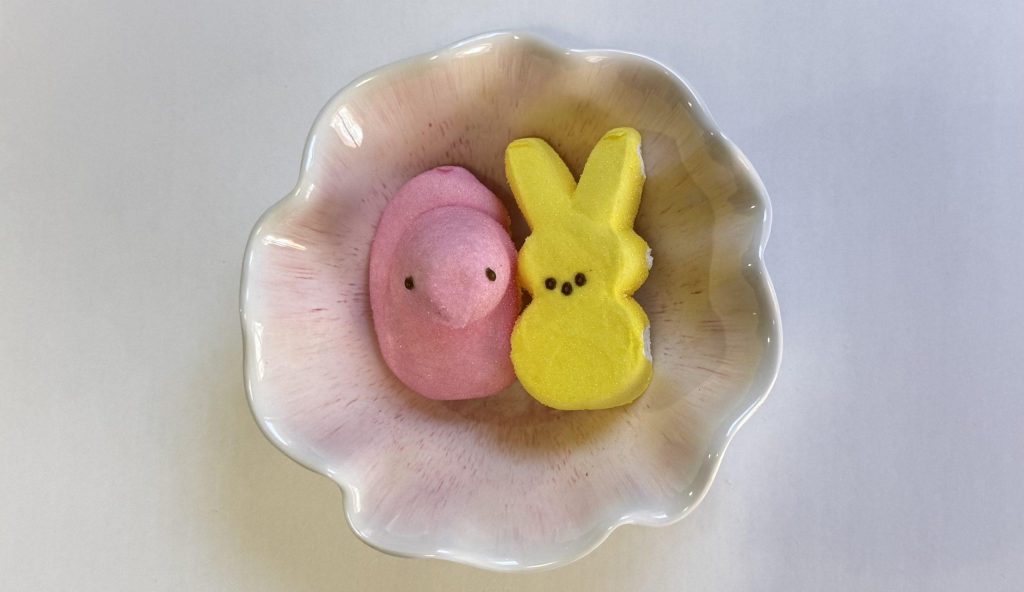 For many of you, this may sound weird or even downright crazy, but for some of us, this is a very real thing that can shape the way we live our lives. It can affect our food choices, clothing choices, and what activities we enjoy.
Adulting Leveled Up: Parenting with Sensory Issues
Trying to “adult” when you’re fighting off a sensory overload is already a struggle. Now, you have tiny humans relying on you for, well, everything. And, as every mom knows, children are a non-stop stream of sensory output. They are loud, sticky, hot, smelly balls of energy whose favorite place to do somersaults is on your lap.
There are times when it is too much for any mom, and as a mom with sensory issues, your threshold may be even lower. So, here are a few tips I’ve come up with as a neurodivergent mom to make parenting with sensory issues more manageable.
1. Take Care of Yourself First
When you, as a mom, are more regulated, you are able to be more tolerant and present for your children. Figure out what things bother you. Awareness is the first step to fixing any problem. For example, I need to be aware of the way my clothes feel on me. I need to prioritize clothes that are comfortable and are not going to cause me any sensory issues. Some things that I look out for are socks that are too tight, necklines that irritate me, and material textures that I find distracting. This helps me to be more regulated and less distracted as a starting point to my day.
2. Mom’s Only
It’s ok for there to be things in your family home that are just for you. This one seems like a no-brainer, but it’s something we as moms often forget. It’s ok to buy yourself things that are different from what your family uses, whether it’s a different type of bread that you enjoy eating, a blanket that is your favorite texture, or a particular dish that you love the feel of in your hand. Having things that are for your use alone is a great way to take care of yourself, especially when you have sensory issues.
3. Ask for Help
This is so important! When you’re struggling with something, always remember to ask for help. If you’re struggling to focus because the world is too loud, tell everyone you need some quiet. If you’re feeling “touched out” and like you’re going to lose it if your mini-me squishes your face one more time, ask another adult for a break. Plan some time for yourself, ask for help sorting your closet, or make a daily to-do list with the insight of your partner or a friend. I promise more people are willing to help us than we think. All we need to do is ask.
4. Teach Kindness
Most people around us will not understand what we struggle with or what we may need. However, being open and honest with our experiences can teach others a lot. Advocating for yourself is a great way to encourage understanding, respect, and kindness. This is especially true for our children. Just as no two people are the same, every brain works differently. Neurotypical, neurodivergent, whether we have anxiety, ADHD, or are on the autism spectrum, we all see the world in a way that is uniquely US. Learning to respect everyone’s differences and challenges and to support someone even when you don’t understand them is an amazing skill to learn. When this is something we teach our children from a young age, they will already be in a better position than most of us were.
» » » » » » RELATED READ: Sensory-Friendly Family Activities in Albuquerque « « « « « «
You Got This!
Living with sensory issues can be challenging. Being a mom with sensory issues is a whole different level. Mama, remember to take care of yourself and give yourself grace. Hopefully, with a little bit of courage and honesty, we can raise a generation of kind, supportive, and understanding people who change the meaning of what it means to be “normal.”
» » » » RELATED READ: Feeling Defeated as a Mom: Doctor’s Appointment Meltdown « « « «
Here are a few resources if you are interested in learning more:
- Sensory Overload is Real
- Sensory Overload with Anxiety
- ADHD and Sensory Overload
- Autism and Sensory Issues
- Neurodivergence at a Glance