


Peer into an ice-filled cave, summit a volcano, and see petroglyphs and historic inscriptions on an amazing day trip exploring New Mexico’s cool and volcanic history.
This day-long adventure features some of my favorite family-friendly hikes in New Mexico, including the Bandera Ice Cave, El Malpaís, and El Morro National Monuments. It’s dog-friendly too!
The trip explores a remote area of western New Mexico, so be sure you have water, snacks, lunch, sun protection, and a full tank of gas before you begin.
Stop 1: El Malpaís National Monument
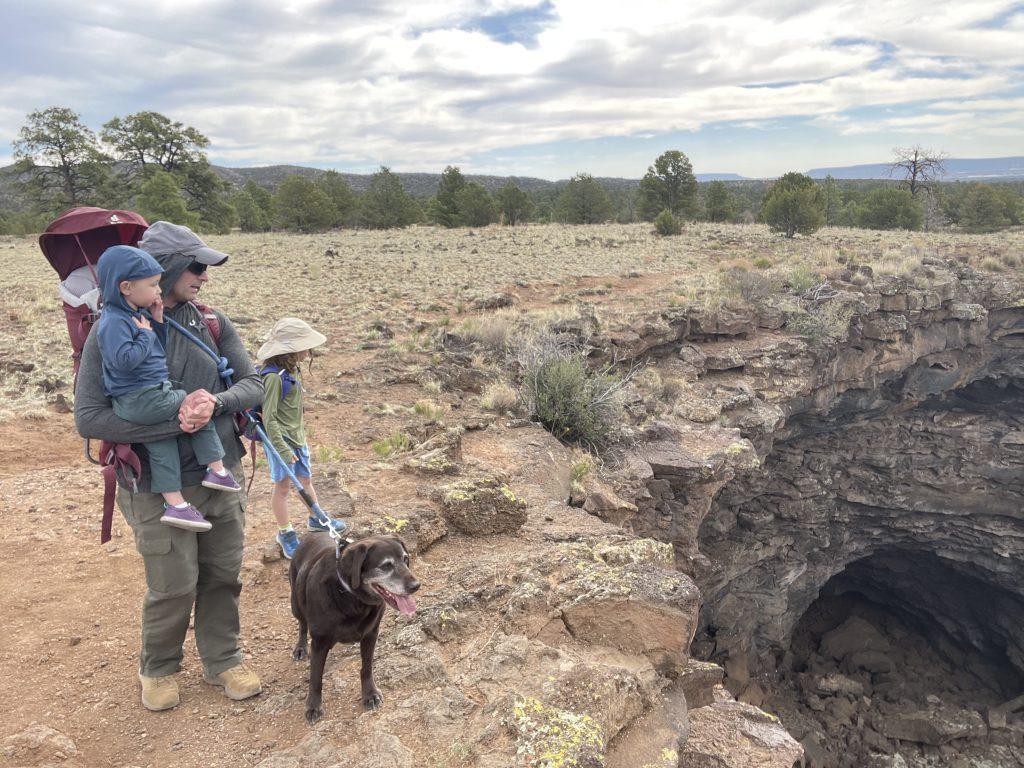
Journey back in time and explore the volcanic history that shaped New Mexico’s landscape with your first stop: El Malpaís National Monument.
Wake up early and hop in the car to drive about 90 minutes to the El Calderon Loop Trail, about 25 minutes south of Grants.
The trail meanders past several lava tube caves, formed by rivers of lava from nearby volcanoes. The first cave, Bat Cave, is home to Brazilian free-tailed bats.
Most caves are closed to visitors, but a new viewing platform set to open in summer 2026 will allow visitors to step inside the mouth of Junction Bridge Cave.
Several signs along the trail explain New Mexico’s volcanic history and how it created the caves, calderas, and lava fields we see today.
After the caves, the trail continues up several steps (so leave strollers at home) to the top of El Calderon, a cinder cone volcano that last erupted about 30,000-60,000 years ago. A mile-long loop traces the rim of the caldera.
The total El Calderon Loop Trail is about 3.7 miles, if you take the dirt road back to the parking lot from the caldera. You can shorten the route further if you skip hiking around the top of the volcano, like we did.
Be sure to check a trail map before you begin. Entrance to the national monument is free.
The parking lot has pit toilets, but there is no water available. There is also a lovely, shaded picnic area to eat a quick lunch before heading to your second stop of the day.
🚗 🚗 🚗 For another learning-filled day trip, check out Salinas Pueblo Missions. 🚗 🚗 🚗
Stop 2: Ice Cave & Bandera Volcano
After your lunch break, get back in the car and drive about 10 minutes west on NM-53 to the Ice Cave and Bandera Volcano.
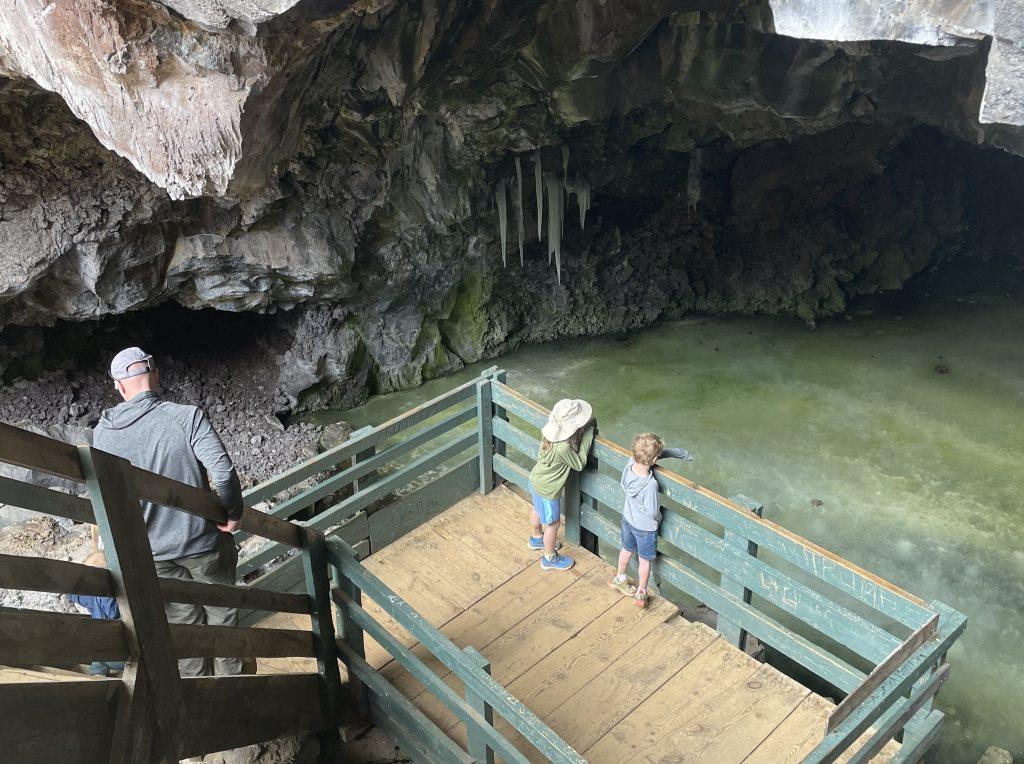
Here you can see an amazing ice-filled cave—a collapsed lava tube that is filled with 20 feet of ice year round. The ice has been forming for more than 3,000 years!
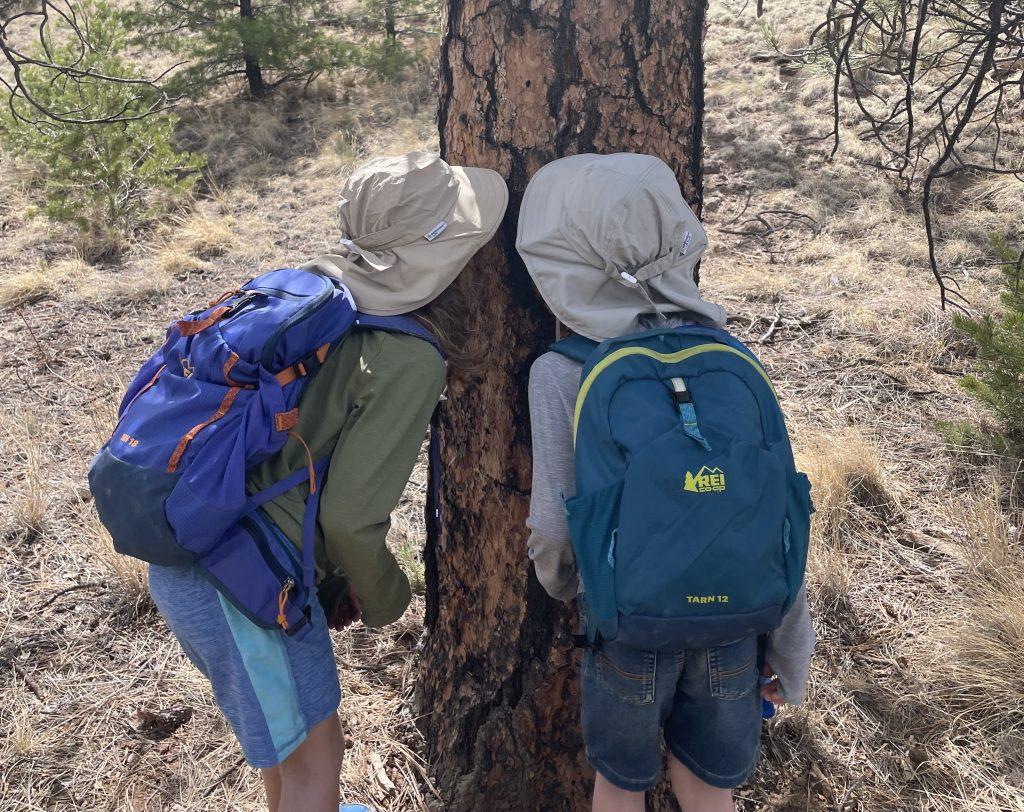
The easy path to the ice cave passes by Ponderosa pine trees and several points of interest. Be sure to smell the Ponderosa pines—they smell like vanilla!
After about a quarter mile, the trail reaches 72 wooden steps. The cave is visible from the top of the steps, but walk down the stairs to truly experience its magic! The cave stays below freezing all year long, and the cool temperatures are the perfect balm to a hot day!
If your legs aren’t tired after walking back up the steps, you can hike about 0.75 miles uphill to the nearby Bandera Volcano that formed the ice cave.
The cave and volcano are privately owned and open from March 1 to Nov. 1. Tickets are $14 for visitors age 13+, $7 for children ages 6-12, and free for children under 6.
A $1 discount is available for members of the military, senior citizens, and AAA members.
Dogs are welcome on the trail and steps, too.
Stop 3: El Morro National Monument
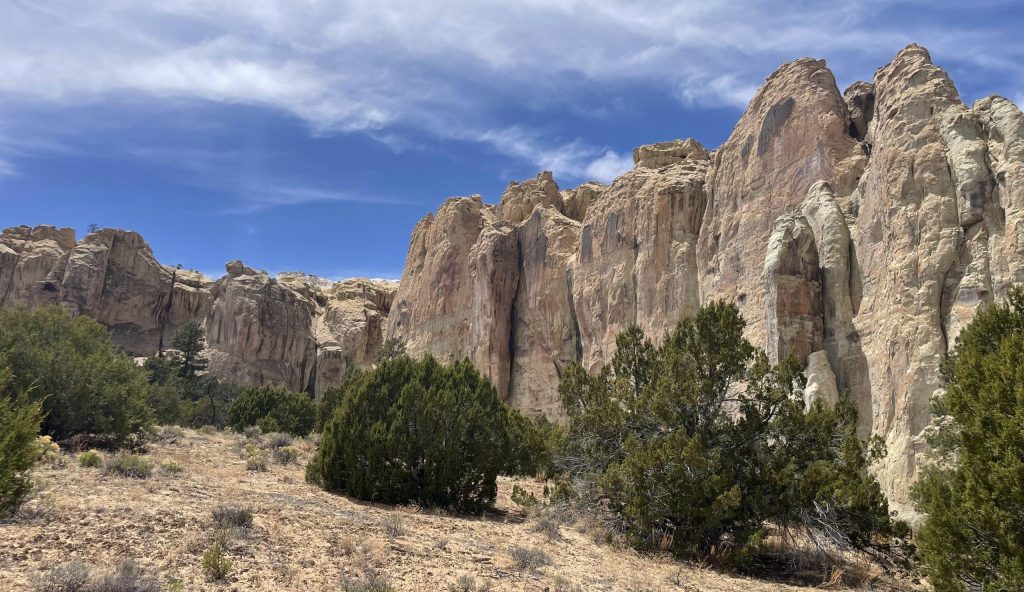
Load up the car again, turn back onto NM-53 West, and drive about 20 minutes to El Morro National Monument.
This unique site protects a watering hole that has drawn travelers for centuries. Ancestral Puebloans built homes on top of the sandstone bluffs, and the desert oasis below has long hosted Spanish conquistadors and American soldiers.
On top of the bluffs sits Atsinna, the largest pueblo in El Morro that dates from about 1275. A 2-mile hike heads up to view the dwellings.
But the monument’s highlight is the easy, paved 0.75-mile Inscription Rock Trail that skirts the base of the bluffs and passes the watering hole itself.
Petroglyphs and inscriptions in Spanish and English cover the face of the bluffs near the natural pool.
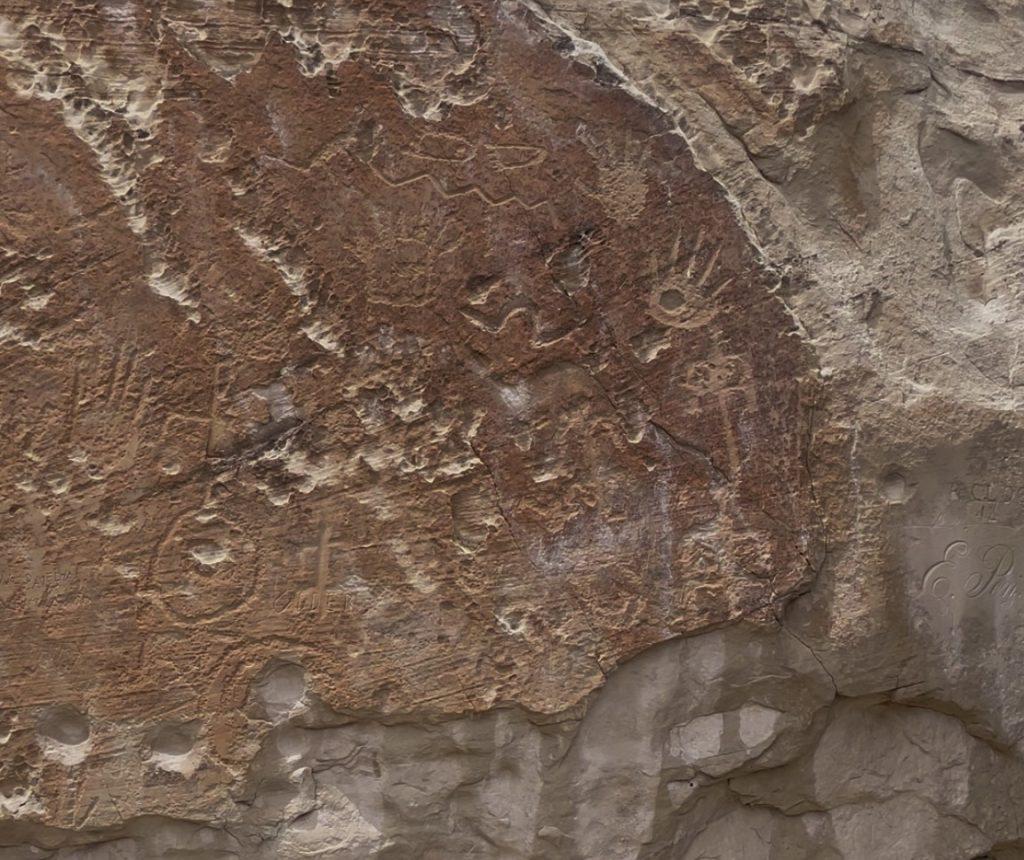
Ancestral Puebloans carved petroglyphs into the rock, and the area remains a special place to the many people who call the valley home, including the Zuni (A:shiwi), Navajo (Diné), and Acoma.
Spanish conquistadors left their mark too, including Don Juan de Oñate, who founded the first Spanish colony in New Mexico and is notorious for the Acoma Massacre. Oñate carved a message into the rock at El Morro in 1605—that’s 15 years before Plymouth Rock.
American travelers and members of U.S. Army expeditions etched their names and messages, too.
To best understand the markings, borrow a free trail guide from the visitor center or join a ranger-led tour through the site. And don’t forget to peer past the reeds into the pool for a glimpse of the tiger salamander that calls the area home.
The site is free to visit.
Be sure to pick up an El Morro Junior Ranger booklet at the visitor center. Children can swap their completed activity book for a Junior Ranger badge, and park rangers will swear them in as official Junior Rangers.
Head back home.
After an exciting day exploring western New Mexico’s geology and history, load up the car and begin the 2-hour drive back to Albuquerque.
On your way back to the city, stop by the El Malpaís Visitor Center in Grants and pick up the monument’s Junior Ranger booklet there. We grabbed the badges while there, too, stowed them in the center console, then awarded them to our kids when they finished their required activities.
Alternatively, you can stop by the visitor center at the beginning of your day, especially if you have questions about trail conditions. The visitor center typically opens at 9 a.m. We wanted to hike as much as possible in the cooler morning weather, so we stopped at the visitor center on our drive home.