


The other morning, my 4-year-old carefully lined up his shoes by the door and reminded me, “We can’t forget my water bottle, Mom.” I had to pause for a second—because usually, I’m the one doing all the reminding. But in that moment, I saw a glimpse of the independence and responsibility I hope my boys carry with them as they grow.
As moms, we spend a lot of time thinking about our kids’ education.
Will they learn to read on time? Will math click? Will they be prepared for middle school, high school, college—and beyond?
Of course, academics matter. But if we zoom out for a minute, what really sticks with our kids long after school isn’t just spelling lists or multiplication tables. It’s the skills that help them navigate everyday life, adapt to challenges, and stay grounded when things get hard.
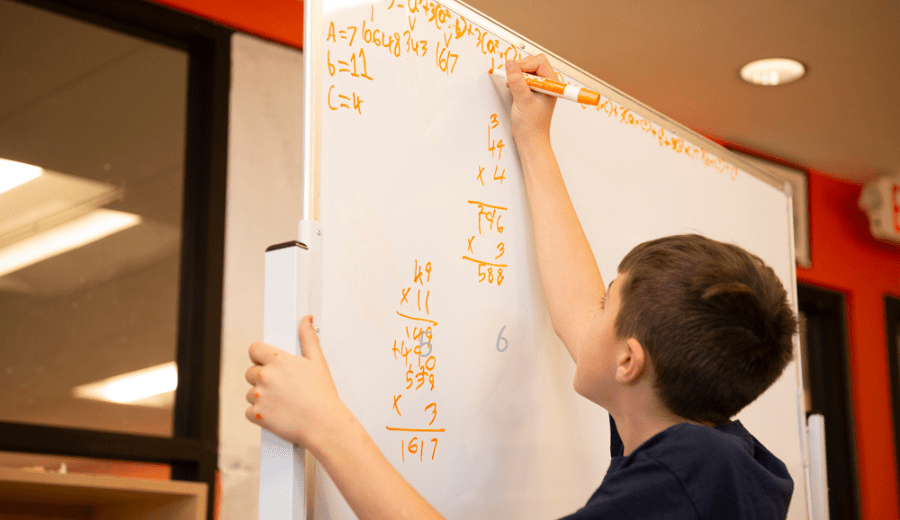 That’s where a Montessori education really shines.
With a Montessori education, children aren’t just memorizing facts. They’re building executive functioning skills. That might sound a little “science-y,” but in plain terms, it’s the set of mental tools kids needed to focus, problem-solve, and manage themselves. Honestly, it’s the stuff we wish we had mastered before adulthood!
What is executive functioning?
Executive functioning is a set of four superpowers that help set your child up for success. What are they, and what do they look like both in a classroom and at home?
- Working memory. In a Montessori classroom, children follow multi-step lessons and use materials that build on each other. That might look like a child remembering the order of bead work in math or recalling the sequence of sounds while learning to read. At home, that translates into remembering how to clear the table or follow all the steps of getting dressed without reminders. That feels like a major mom win!
- Cognitive flexibility. Life doesn’t always go according to plan. Montessori encourages kids to adapt by exploring different approaches and problem-solving when something doesn’t work. Later in life, that becomes the ability to adjust when plans change, when a group project takes a new direction, or when life throws curveballs. Honestly, this is an area where even I could use some help.
- Inhibitory control. Patience is a skill kids need everywhere, whether they’re waiting in line at the zoo for the polar bear feeding or sitting through a sibling’s T-ball game. In Montessori, children practice slowing down, waiting their turn, and focusing on their work in a calm, purposeful environment. Over time, this builds the ability to pause, think, and make intentional choices.
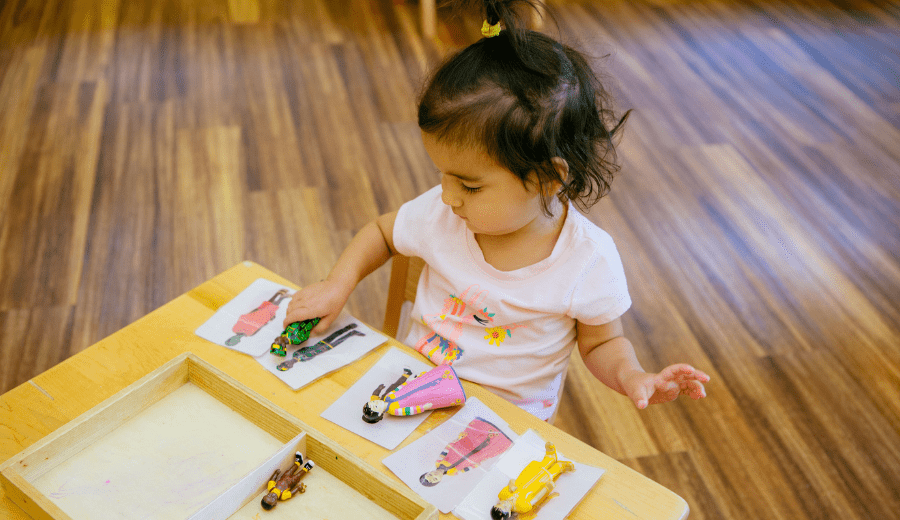
- Self-regulation. With the freedom to choose their work, Montessori kids learn how to manage their time and take responsibility for their learning. It’s independence in the making. Imagine your child setting up their work mat, choosing a lesson, and carefully returning everything to its place. That responsibility and confidence show up at home when they can pack their own lunch or get ready for school without constant reminders.
 Why does this matter?
It’s reassuring to know that studies show Montessori students perform well academically. They often score higher in math, reading, and writing, and they tend to show stronger social-emotional skills, too. But when you ask parents what they really hope for their kids, it usually comes down to bigger things:
-
“I want them to be confident.”
-
“I want them to handle challenges.”
-
“I want them to grow into kind, capable adults.”
That’s exactly what these executive functioning skills support. They give kids the ability to handle frustration without melting down, to work with others respectfully, and to stay calm and focused even when life feels chaotic.
As moms, we know how fast childhood goes. The days are long, but the years? They fly. And while we want our kids to thrive in school, what we really want is for them to thrive in life.
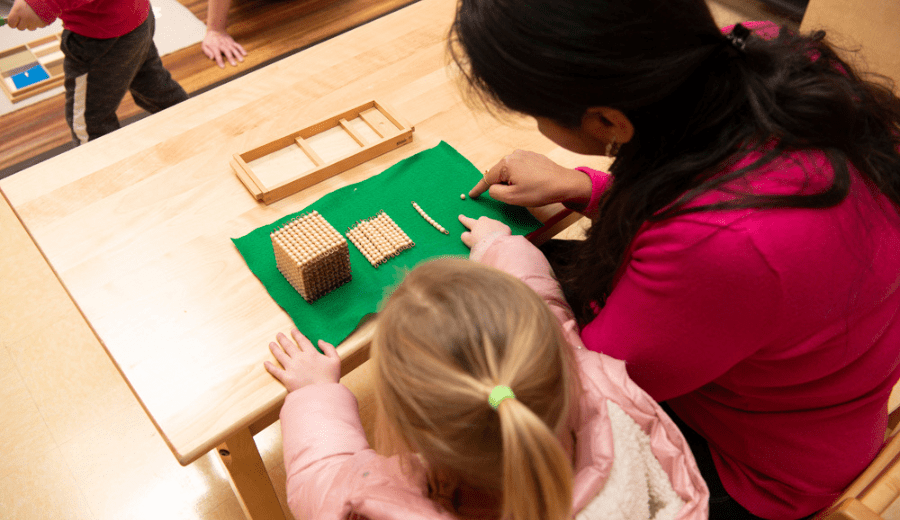 A Montessori education gives children that gift. By focusing not only on academics but on executive functioning, it prepares kids for whatever the future holds. Whether that’s middle school, college, or the challenges of adulthood, Montessori kids carry with them confidence, adaptability, and a strong sense of self.
At the end of the day, we’re not just raising students. We’re raising human beings. And giving them the tools to thrive in school and in life? That’s a gift that truly lasts forever.